Kitchen Cleaning Tools Guide: Towels Scouring Pads and Sponges
A kitchen doesn't stay clean because of the strongest bottle on the shelf. It stays clean because of the cloth in your hand, the pad under the pan, and the sponge beside the sink. Three small things, almost no cost, and they quietly decide whether your counters feel fresh or faintly tired by Thursday.
Here is how to choose them well, and how to stop them from becoming the dirtiest objects in the room.
Most people own one cloth and use it for everything. That single cloth is usually why the kitchen never feels quite clean.
A towel has three jobs, and they pull in different directions: absorbing, wiping, and drying. The trick is to give each job its own cloth.
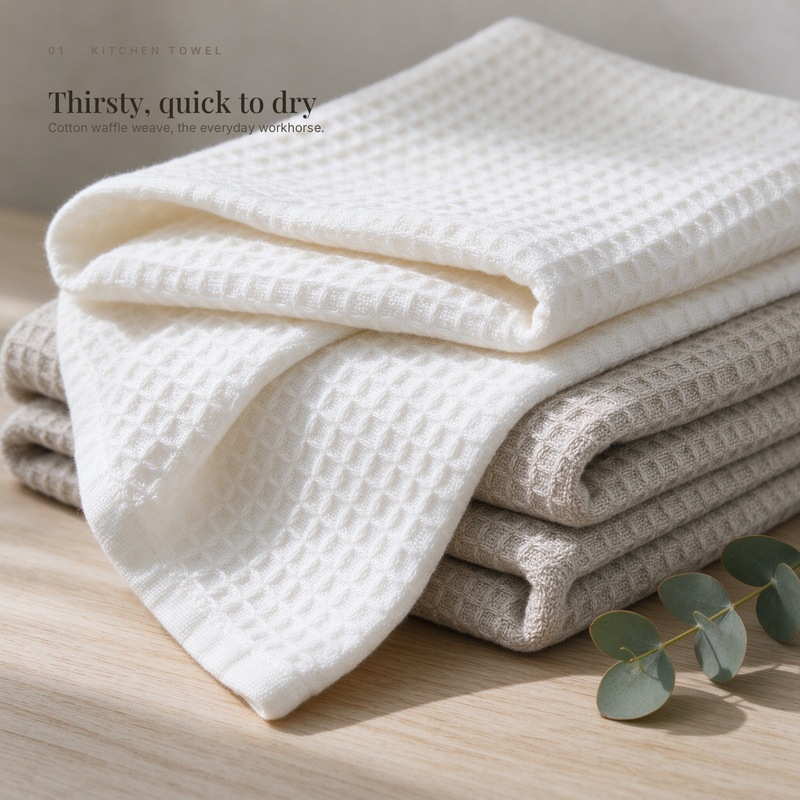
Cotton waffle weave is the everyday workhorse. Thirsty, quick to dry, and the textured surface lifts crumbs and smears instead of pushing them around.
Linen is crisp, lint-free, and the right choice for glass, mirrors, and anything you plan to photograph.
Microfiber grabs grease and fine dust beautifully, which makes it excellent for a final polish and a poor choice for a hot pan or a wet countertop, where it just spreads water.
Two towels cover almost every kitchen: one for hands and counters, one reserved for clean dishes. Keep them apart and you stop the most common cross-contamination habit in the home.
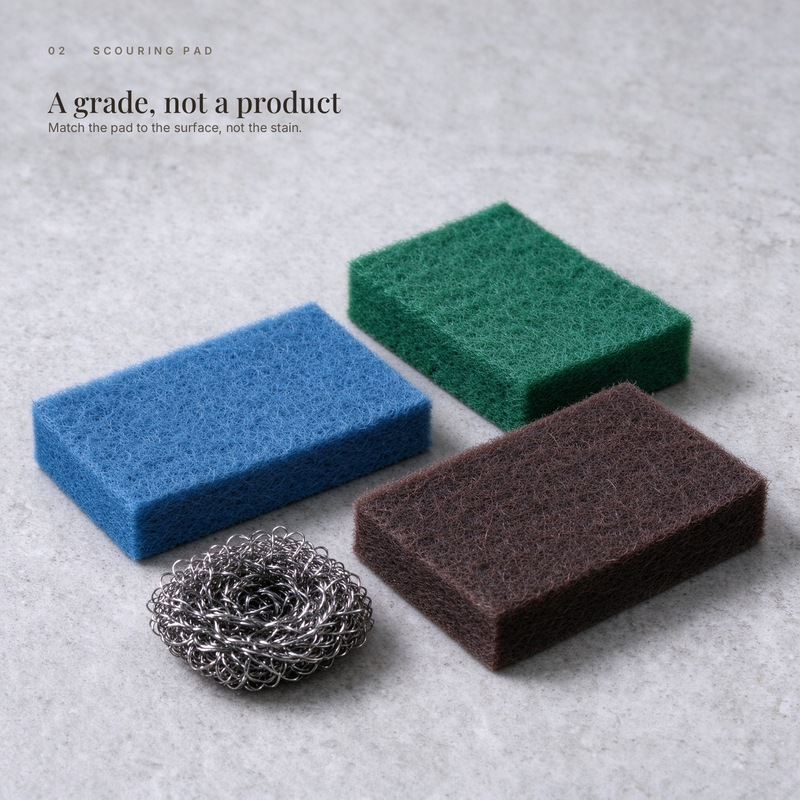
Scouring pads are sold as if they were interchangeable. They are not. Each color and material is a different level of aggression, and using the wrong one is how nonstick pans get dull rings and glass gets fine scratches.
Non-scratch pads (usually blue or soft green) for nonstick coatings, enamel, glass, and anything with a finish to protect.
Heavy-duty pads for stainless steel, cast iron, baking sheets, and the bottom of a pot that has seen things.
Steel wool only for bare metal and grill grates. Never on enamel, ceramic, or coated surfaces.
Sponge-backed pads are convenient for a quick job, but the sponge layer is the part that turns first. Treat them as short-lived.
The rule of thumb: scrub the dirt, not the surface. If you can feel the pad biting, it's too rough for what's under it.
A sponge is soft, absorbent, and always slightly damp, which is exactly the conditions bacteria enjoy. That doesn't mean give it up. It means treat it as equipment with a lifespan.
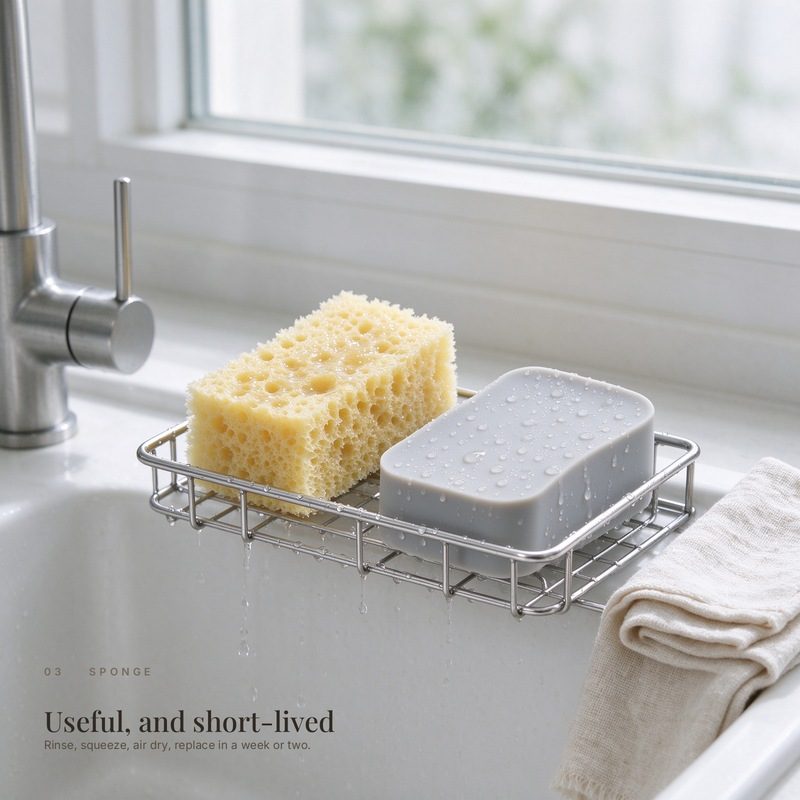
Cellulose sponges are soft, very absorbent, and good for everyday wiping and light washing.
Polyurethane sponges are tougher and scrub better, though they dry more slowly.
Natural sea sponges are gentle enough for delicate glassware and nice to hold, but they need more care.
Silicone sponges don't absorb anything at all. They are the sane choice for raw meat prep and for anyone who wants a sponge they can rinse and move on.
The habits that matter are simple. Rinse and squeeze it out after every use. Let it dry where air can reach it, not flat in the sink well. Never use the same sponge on raw meat juices and then on a plate. And replace it every week or two, before it starts to smell like a basement.
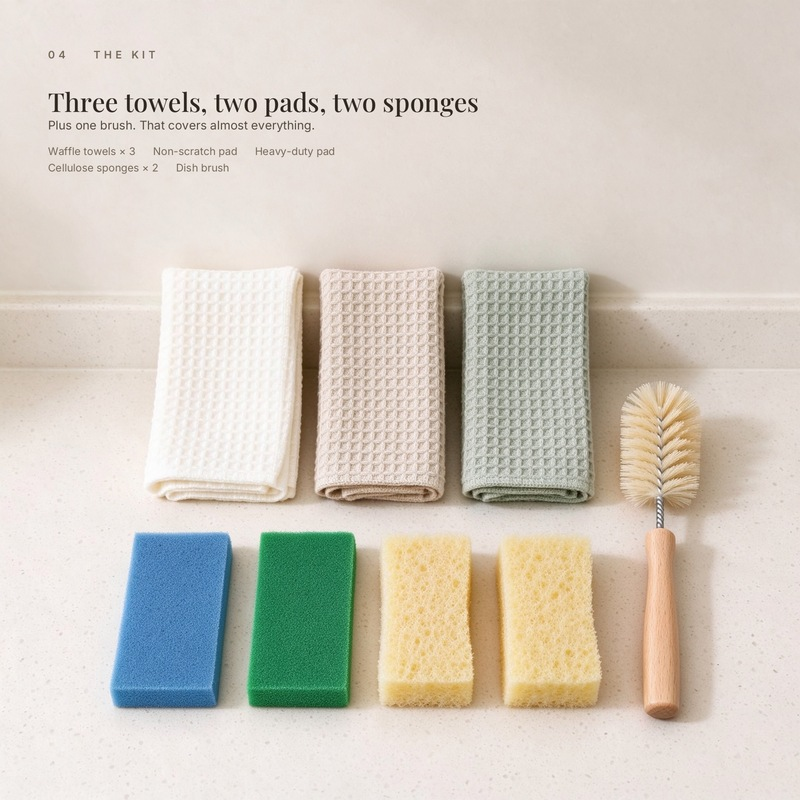
You don't need a drawer full of gadgets. A workable kitchen runs on:
three cotton waffle towels, one non-scratch pad, one heavy-duty pad, two cellulose sponges on rotation, one dish brush for glasses and bottles, and a squeegee if your counters see a lot of water.
That's it. Everything else is a preference.
Summary
A kitchen is only as clean as the tools doing the cleaning. Buy fewer, choose better, and replace them before they tell you to.
Shower Cap Styles Guide-Find the right cap for every hair type and moment