Three Ways to Scrub: Linen, Viscose, and the African Net — On Nights When You Treat Your Body Gently
How many showers does a person take in a lifetime?
Tens of thousands. Most of them are hasty — water, body wash, rinse, out. But there are other nights, the ones where you want to slow down. Where you want a hand to travel past your shoulder, down the length of your spine, and carry away the dust, the sweat, the tiredness of the day. The places you can't reach are the blind spots you reserve for yourself.
That is where the back scrubber strap, and the African net sponge, come in. They are not tools. They are a quiet extension — lengthening the arm, handing patience to your own back.
Linen: The Rough Kindness of the Earth
Linen is one of the oldest fabrics a human has ever known. It has stood in the wind, grown along field ridges, been twisted into thread and woven into a band — and finally rests in your palms.
The first touch makes you breathe in sharply. It is not a flattering texture. It is like being held by a rough, strong hand that means no harm. It does not coax you. It simply does its honest work — lifting away the dead skin, the listless pores, the small tiredness you didn't know you were carrying.
People who use linen straps are usually a little unsparing with their own bodies. They know the patch of back that feels like sandpaper. They know the little bumps that arrive with the changing seasons. Twice a week, under running water, they hold one end in each hand and draw the strap slowly across. Not forcefully. With intention.
Linen doesn't foam much. Its language isn't in the lather. It's in the faint, warm, awake flush left behind — the look of skin being woken up.
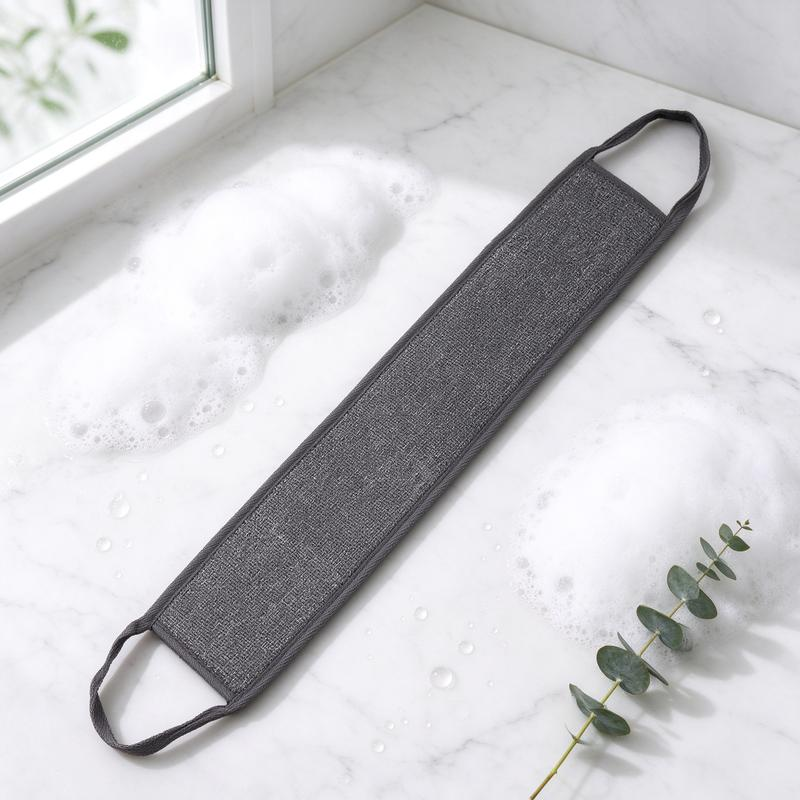
Viscose speaks another tongue.
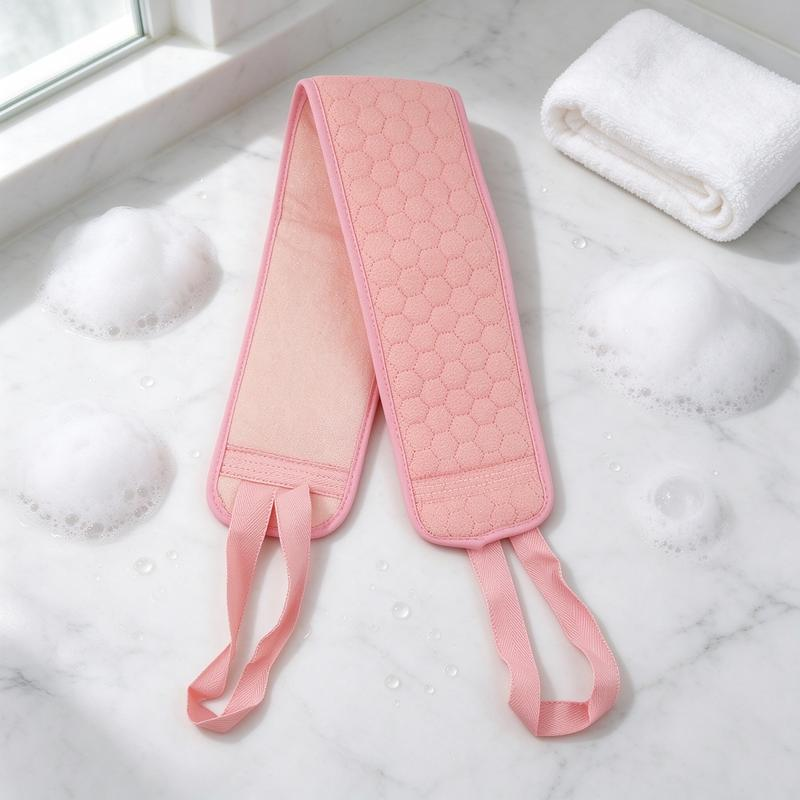
It begins as wood pulp, as forests crushed down and regrown into something else. It once had a lovely name — artificial silk. To the touch it is cool, smooth, compliant. Like a breathable cloud cut into a long band.
A viscose back strap asks nothing of you. Even if your skin is sensitive, even if you are too tired to move, it will not judge you. A single drop of body wash, a little water, and the whole band swells into a thick lather — snow gathered in your hands.
It does not exfoliate. It simply keeps you company.
For people who shower every day, viscose is the choice that never goes wrong. It manufactures no pain. It asks no fortitude. It only, softly, day after day, washes you clean.
In Ghana. In Nigeria. Bathing has never been a hurried, private act.
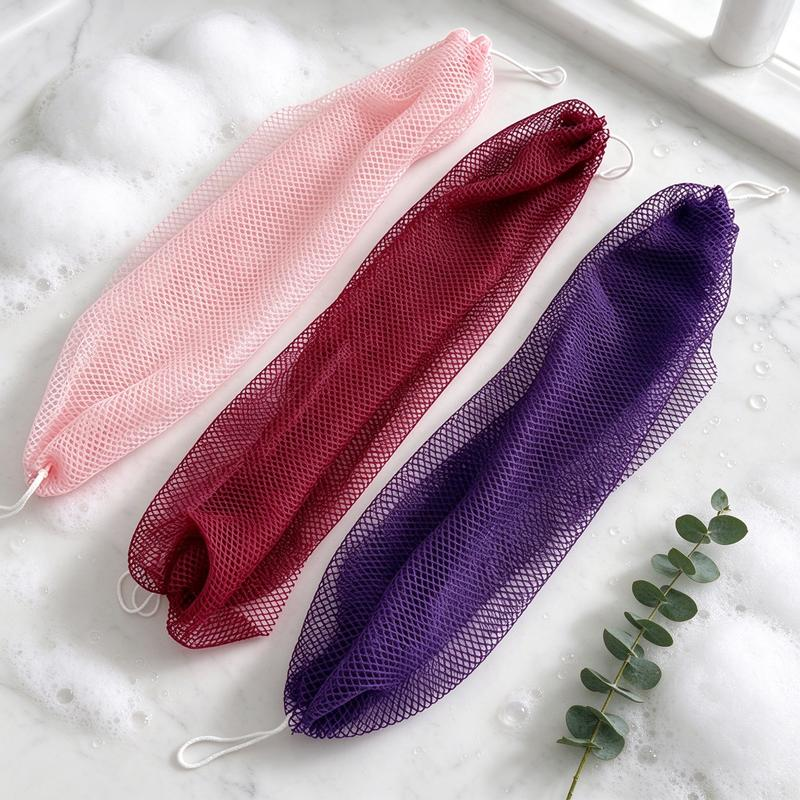
The African net sponge — that large, flower-like web woven from nylon thread — is an object passed down through generations. In local languages, its name is almost the word for "bathing" itself.
Dip it in warm water and it softens. Add soap and it blooms like a cloud in your hands. You are not scrubbing. You are wrapping. You draw the net around your back, over your shoulders, from neck to ankle, as if a whole warm tide is pushing past you. There is friction — the friction of a mesh, elastic, almost amused — not the solemn kind linen gives you.
What moves me most is its scale. An ordinary washcloth can only manage the size of a palm. The net allows you, gently and slowly, to rediscover the whole of your body.
Writing this, I realized these three objects are really three ways of being with yourself.
Linen is the strict teacher, asking you to face your own roughness. Viscose is the close friend, catching you when you are tender. The African net is a faraway place, turning an ordinary evening into a ceremony.
You do not have to choose one forever.
Use linen in the rough seasons. Reach for viscose on the exhausted days. And on weekends when you want a ritual, unfurl an African net. None of them is expensive. All of them deserve a hook in your bathroom, dripping, drying, waiting to be picked up again.
After all, in a lifetime, the one person you should treat most carefully is the body you have worn for all these years.
5 Main Types of Facial Cleansing Sponges | Find Your Perfect Match